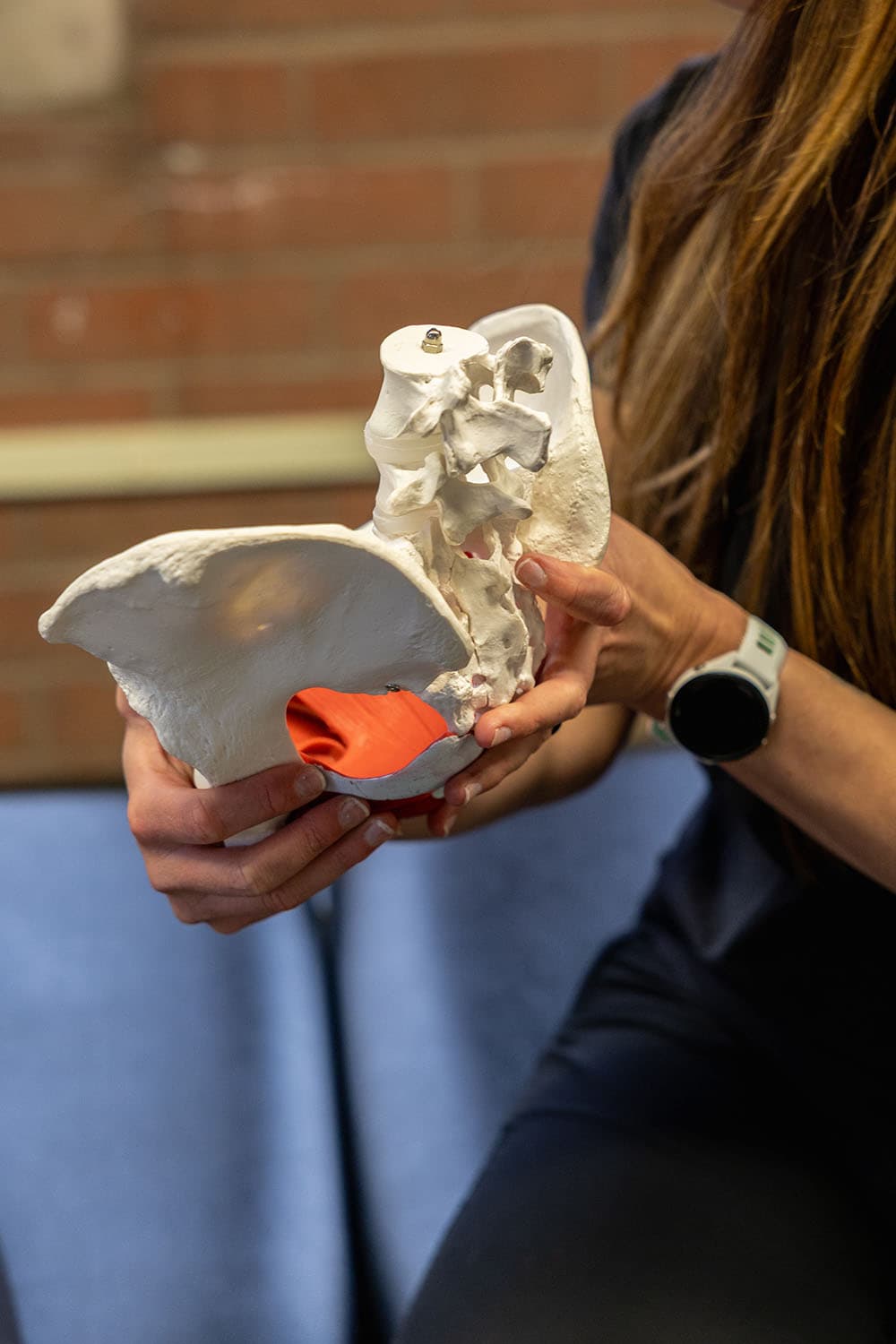
When Kegels Can Make Your Pelvic Floor Dysfunction Worse
November 19, 2025
When Kegels Can Make Your Pelvic Floor Dysfunction Worse
There's a lot of hype about Kegels being the end-all, be-all for pelvic floor treatment. And while Kegels absolutely have their place in pelvic floor rehab, they're often not the best solution for many women experiencing pelvic floor dysfunction.
When it comes to pelvic floor health, we need to understand how to use the proper length-tension relationship of these muscles to produce power, control the flow of urine, and provide essential support for the pelvis and core. If the pelvic floor is too tight or restricted, it can't lengthen or shorten when it needs to—limiting both strength and function.
Think of it like walking around all day with your elbow bent at 90 degrees so your bicep stays constantly engaged. If you then tried to pick something up, you wouldn't be able to generate much force because your arm couldn't fully lengthen before contracting. The same principle applies to Kegels.
If we're constantly "Kegeling" without focusing on the relaxation phase, we can develop a hypertonic pelvic floor—a set of muscles that are overactive, tight, and unable to function properly. Over time, this can lead to more pelvic pain, urinary symptoms, or discomfort with intimacy, as we keep adding tension without helping the body release it.
Kegels need to be prescribed for the right person and done correctly. Like any exercise, they require both contraction and relaxation. Without that balance, we're only training the muscles through a partial range of motion, which can actually make symptoms worse.
We wouldn't do bicep curls halfway and expect to get stronger. The same goes for Kegels: to get their full benefit, we must be able to fully contract and fully relax. That's where the real magic happens.
Why In-Person Pelvic Floor Therapy Matters
If you're unsure whether you're doing your Kegels effectively—or wondering if they're even right for you—working with a pelvic floor physical therapist can make all the difference. In-person pelvic floor therapy allows us to assess how well your pelvic muscles are coordinating with your core, diaphragm, and deep abdominal muscles (what we often call your internal canister).
A truly healthy pelvic floor doesn't work in isolation—it's part of a team that includes your lower abs, upper abs, breathing mechanics, and pelvic bowl muscles. Without looking at this system holistically, even perfectly performed Kegels can fall short of solving the problem.
At Pinyon Physical Therapy in Salt Lake City, we specialize in helping women restore full pelvic function through evidence-based movement, mindful coordination, and individualized care.
If you're ready to better understand your body and learn how to truly strengthen (and relax) your pelvic floor, schedule an in-person pelvic floor assessment today.
Your body deserves more than generic advice—it deserves a coordinated, functional, and confident foundation.